A long decline
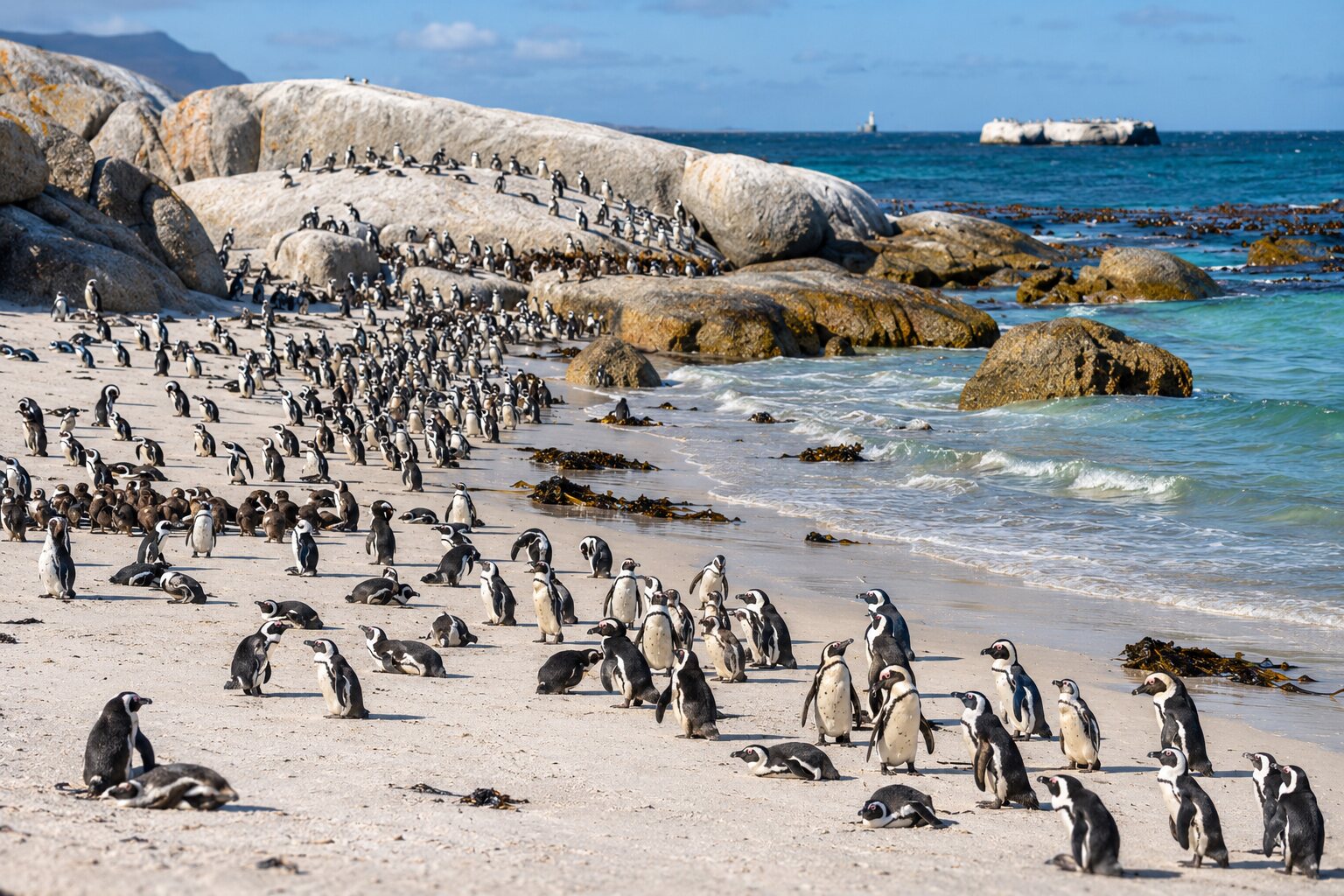
The collapse began more than a hundred years ago, with people. Penguin eggs were harvested by the millions as food, and the thick layer of guano the birds nested in was stripped from the islands for fertiliser — leaving the penguins to nest exposed on bare rock, their eggs and chicks at the mercy of heat and gulls. The population never recovered from those decades of harvest.
The fish moved, the penguins could not follow
The deeper crisis now is food. African penguins live on small shoaling fish — sardines and anchovies — and those stocks have been heavily fished and have shifted away from the historic colonies, pushed by warming, changing seas. A penguin tied to a breeding island can only swim so far to feed its chicks. When the fish are no longer within range, the chicks starve, and a colony can empty in a few poor seasons.
Oil, heat and predators
Other pressures pile on. Major oil spills have oiled thousands of birds at once. Heatwaves drive penguins off exposed nests to cool in the sea, abandoning eggs. On the mainland colonies, land predators and even, at sea, seals and sharks take their toll on a population already stretched thin.
Fighting back
Conservation is now a race. Rehabilitation centres such as SANCCOB clean oiled birds and hand-rear abandoned chicks, releasing thousands back to the wild. Artificial nest boxes give the birds the shaded, protected burrows the stripped guano no longer provides. And conservationists have fought for no-take fishing zones around key colonies, to leave the penguins a share of the fish — the single measure most likely to decide whether the species survives.
Why it matters beyond the penguin
The African penguin is what scientists call an indicator species: its fate tracks the health of the whole coastal ecosystem it feeds in. A sea that can no longer support its penguins is a sea in trouble for everything else that depends on the same fish. Saving it means fixing the ocean around it — which is exactly why it is so hard, and so important.