What a raft is
A raft is simply a cluster of little penguins floating together just beyond the break, returned from a day — or weeks — of fishing at sea. As the light fades they collect offshore rather than landing one by one. Groups merge and drift, heads up, watching the beach, until there are enough of them, and it is dark enough, to go.
Safety in numbers, safety in the dark
The waiting is not indecision; it is strategy. Little penguins are small, slow on land and easy prey, and the open stretch of beach between the surf and their burrows is the most dangerous ground they cross all day. By landing in a tight group, and only once it is properly dark, each bird lowers the odds that it is the one a predator picks. The raft is a way of sharing the risk of that run up the sand.
The run up the beach
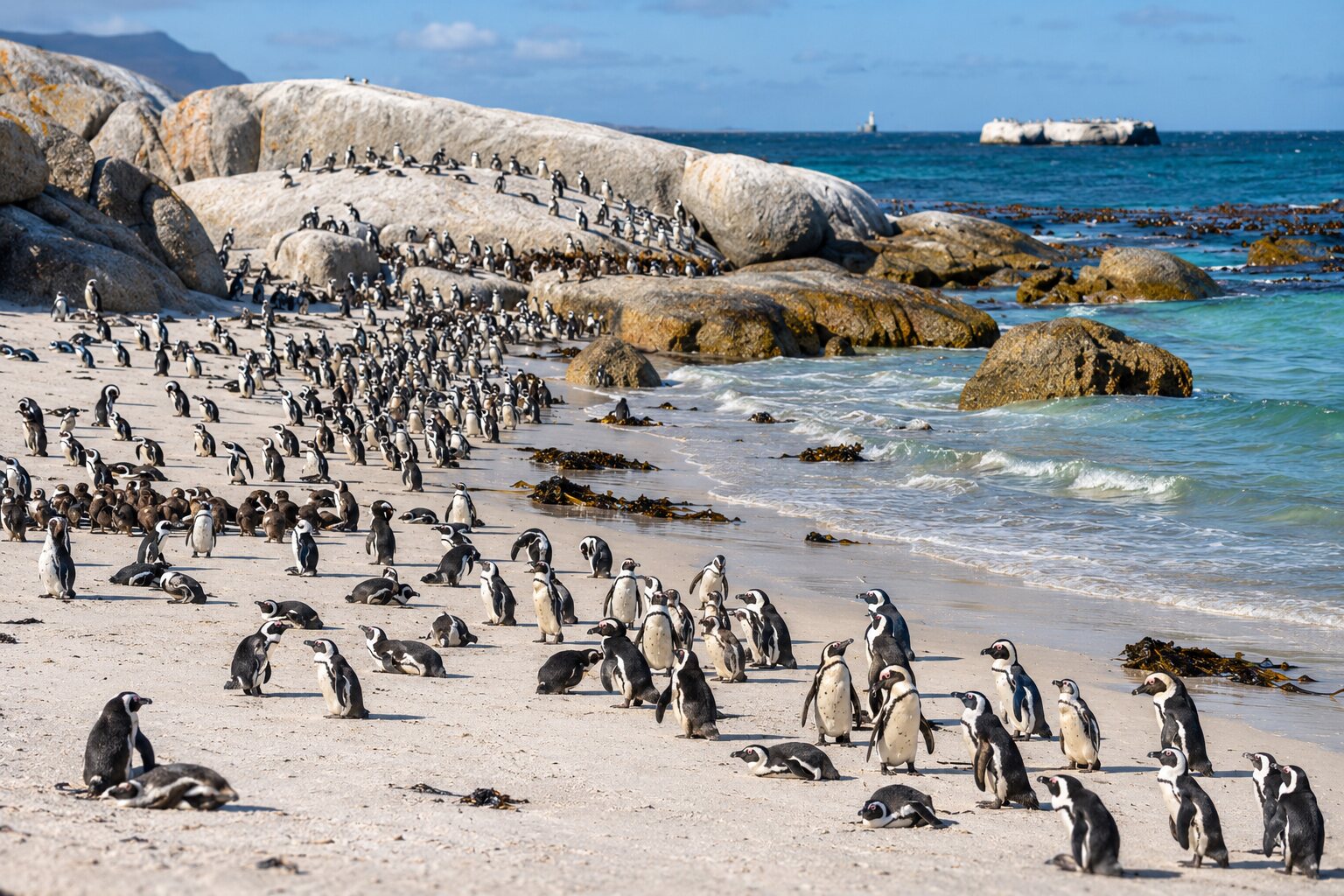
When a raft finally commits, the birds ride a wave in together and bustle up the beach in a tight knot, calling, before scattering to their own burrows in the dunes. Group after group lands as the evening goes on, so a good beach delivers wave upon wave of penguins rather than one single parade. Each bird then finds its own nest, often greeting a partner or chick with a loud, braying call.
How to watch it
The classic place is the Phillip Island Penguin Parade in Victoria, where the whole sequence plays out from boardwalks and stands every night of the year; the St Kilda breakwater in Melbourne and the Oamaru colony in New Zealand offer the same spectacle on a smaller, wilder scale. Wherever you watch, the rules are the same: arrive before dark, keep still and quiet, and never use lights or flash — a bright light on the water can be enough to make a whole raft turn back and lose a night's return to the burrow.