Oamaru after dark
Little blue penguins come ashore only once it is fully dark. Watch from the managed grandstand, and never use lights or flash as the birds cross.
South Island, New Zealand
New Zealand's South Island offers two very different penguin encounters: little blue penguins streaming ashore at the Oamaru breakwater each evening, and the rare, solitary yellow-eyed penguin watched from hides along the Otago Peninsula.
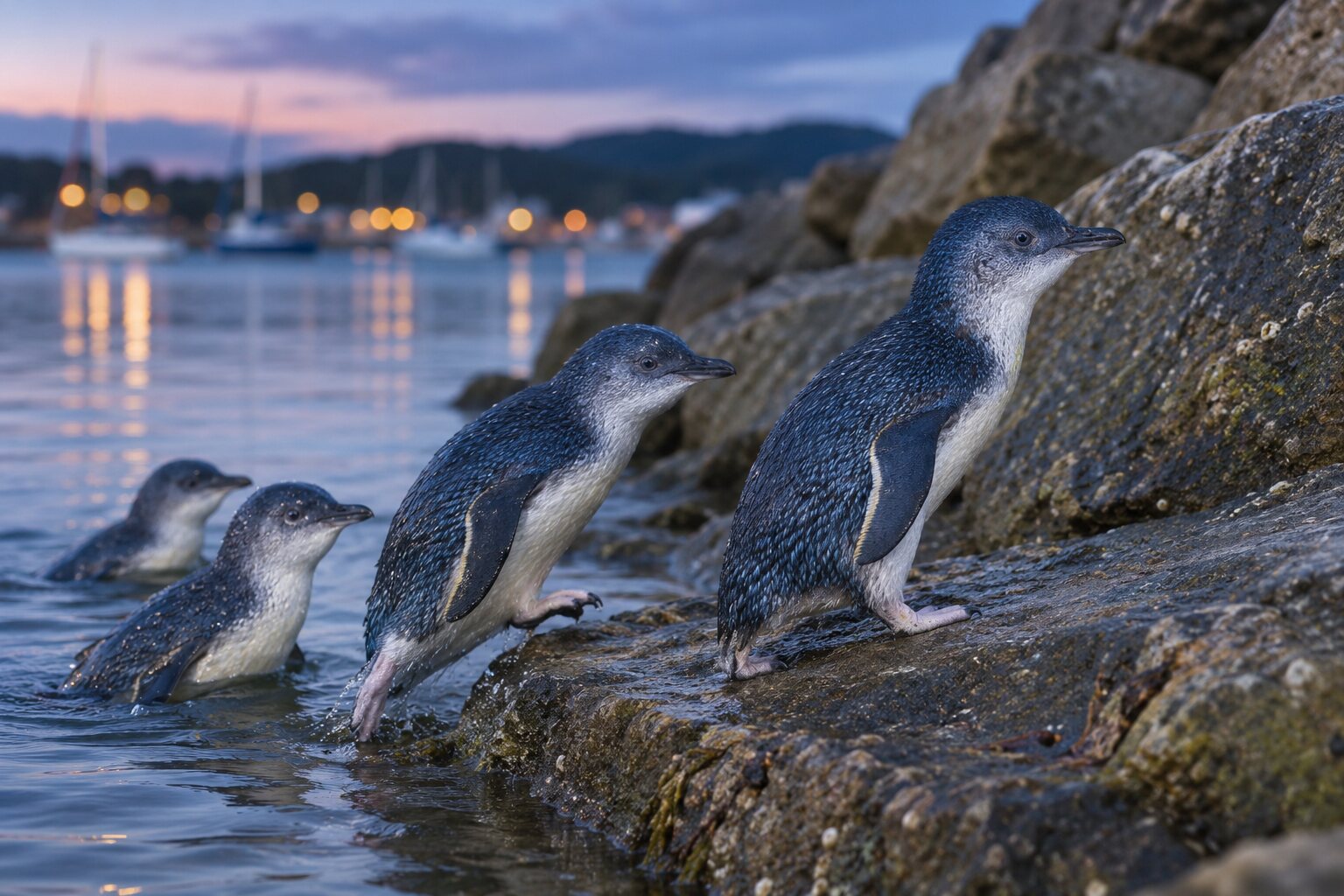
At Oamaru, a colony of little blue penguins — the same species as Australia's little penguin — nests in and around the old harbour breakwater. Each night after dark the birds raft up offshore and come ashore in groups, crossing to their burrows while visitors watch from a managed grandstand.
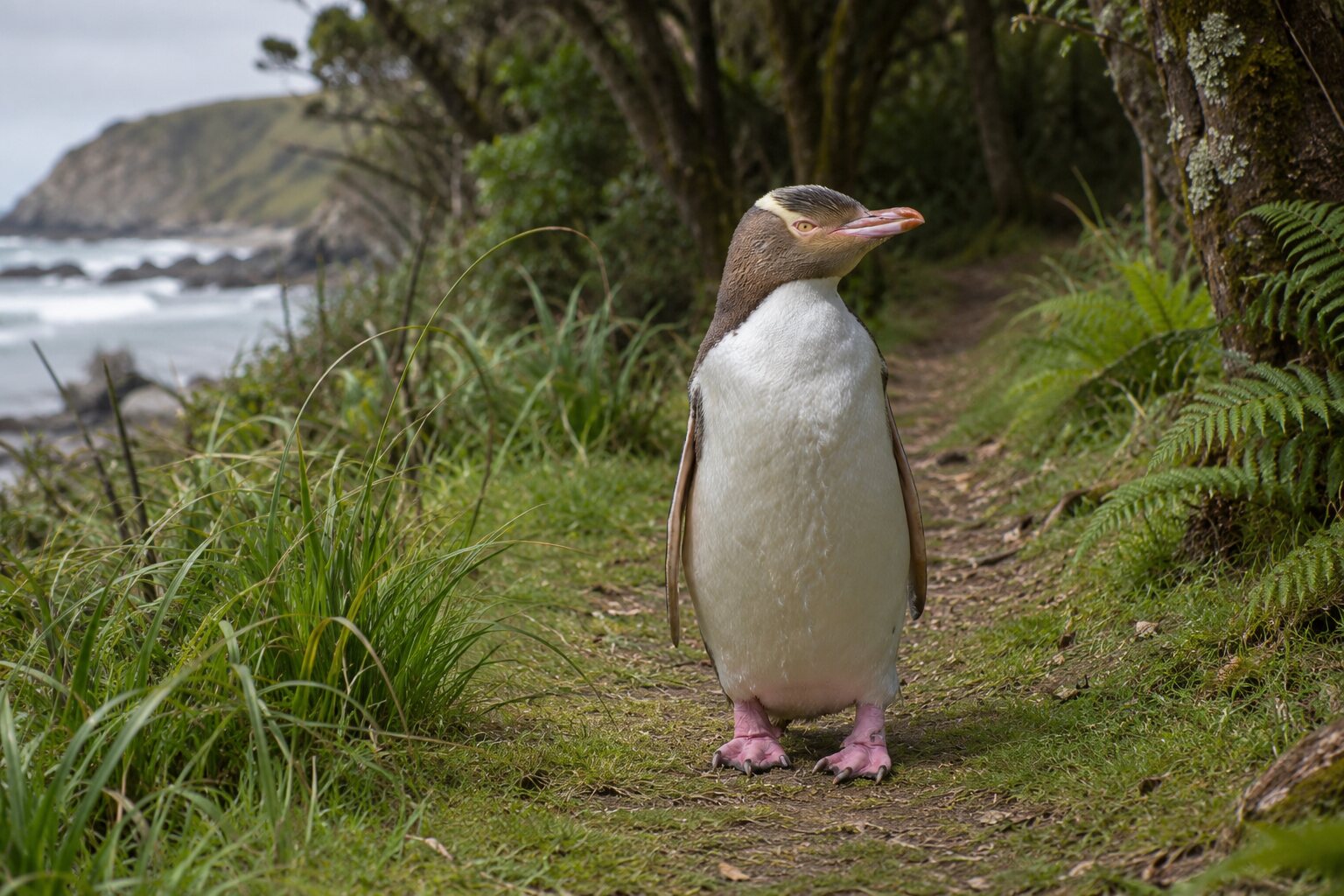
An hour south on the Otago Peninsula lives one of the world's rarest penguins, the yellow-eyed penguin, or hoiho. Shy and un-colonial, it nests apart in coastal forest and scrub and is best watched from hides and boardwalks that keep well back from its landing beaches.
The two sites pair naturally — Oamaru in the evening, the Otago Peninsula by day from Dunedin.
Little blue penguins come ashore only once it is fully dark. Watch from the managed grandstand, and never use lights or flash as the birds cross.
The yellow-eyed penguin is shy and easily disturbed. Watch only from the hides and signed boardwalks, keeping well back from its landing beaches.
Dunedin is the practical base for the Otago Peninsula, with its own wildlife — albatross, sea lions and fur seals — along the same coast.
Both species abandon a landing if people are too close. Stay quiet, stay back, and let the penguins choose when to come ashore.
Oamaru & Otago is one of many wild shores where penguins come ashore. Follow them around the globe.
Where to see penguins